Dec 27, 2021

USFWS agrees to release captive-bred red wolves


Read the story here: https://rewilding.org/hnw-campaign-update-fws-has-agreed-to-release-captive-bred-red-wolves/

Dec 15, 2021

Surviving 70 million years on Earth - now humans have caused the eels' collapse


Read the story here:

https://phys.org/news/2021-12-million-years-earth-decline-endangered.html 
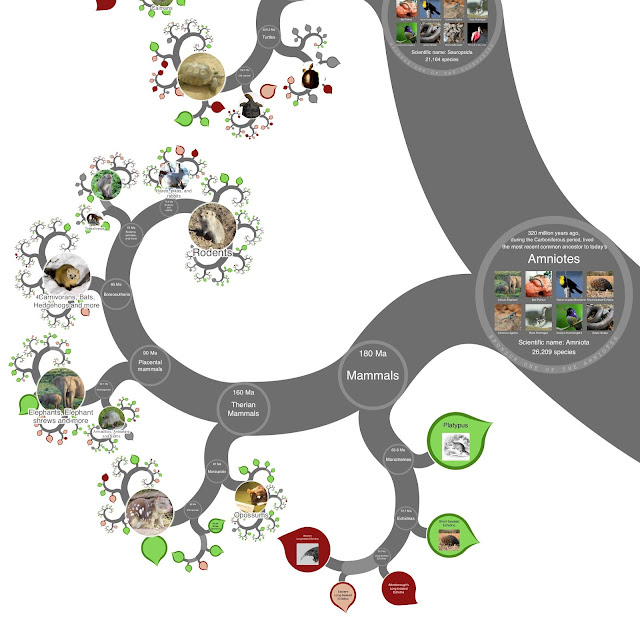
Incredible! Check out this tree of life...


Screenshot from the OneZoom tree of life explorer with leaves coloured according to extinction risk and showing the 'spiral' view of the tree. Credit: OneZoom

Check it out: https://www.onezoom.org/

Is plastic trash in the middle of the ocean becoming a new kind of island habitat?

Read all about it here:

https://www.anthropocenemagazine.org/2021/12/is-plastic-trash-in-the-middle-of-the-ocean-becoming-a-new-kind-of-island-habitat

Dec 14, 2021

Wilderness and Traditional Indigenous Beliefs: Conflicting or Intersecting Human-Nature Relationship?


Read the article here: https://rewilding.org/wilderness-and-traditional-indigenous-beliefs-conflicting-or-intersecting-perspectives-on-the-human-nature-relationship/

Banned decades ago, PCBs still posing threat to wildlife


Read the story here: https://phys.org/news/2021-12-decades-pcbs-posing-threat-wildlife.html


Dec 12, 2021

GEICO makes fun of bird window strikes


In a new commercial, produced by O Positive Films and The Martin Agency, GEICO makes light of birds hitting windows. With an estimated one billion birds being killed in the US every year from window strikes, it's no laughing matter.

Please sign our petition and share:

https://www.change.org/p/birds-hitting-windows-not-funny-geico

Dec 6, 2021

Tigers Rendered in High Pressure Cookers


 Read all about it: https://phys.org/news/2021-12-tigers-days-high-pressure-cookers.html

Dec 5, 2021

To have reverence for all animals… even if they’re tiny, they deserve to live...

Link to the story, here:

https://newyork.cbslocal.com/2021/11/12/volunteers-save-fish-and-frogs-from-murky-sump-near-south-huntington-school/

Nov 30, 2021

Should you bring children into a crowded and ecologically declining world?


A Good Read:

https://overpopulation-project.com/the-decision-to-forego-childbearing/


Nov 29, 2021

Feds consider feeding starving manatees


Read all about it:

https://phys.org/news/2021-11-lettuce-cabbage-manatees-feds-conservationists.html

Yet another sick bobcat at Joseph D Grant Park

On Saturday afternoon, a park visitor spotted the bobcat and noticed something was wrong. 

This morning we made sure the park rangers were aware. They said they had also seen a very large, "older" bobcat, so there may be two.

Stay tuned. 

As Temperatures Drop, Cold-Stunned Sea Turtles Make an Appearance


https://islandfreepress.org/outer-banks-news/as-temperatures-drop-cold-stunned-sea-turtles-make-an-appearance/

CBD at it again. Huge THANK YOU!


Lawsuit Aims to Protect Endangered Wildlife From Massive Sport Hunting, Fishing Expansion on National Wildlife Refuges

WASHINGTON— The Center for Biological Diversity sued the U.S. Fish and Wildlife Service today for failing to protect endangered wildlife harmed by expanded hunting and fishing on national wildlife refuges across the country.

Today’s lawsuit challenges the Trump administration’s decision last year to expand hunting and fishing on 2.3 million acres, across 147 wildlife refuges and national fish hatcheries...more:

https://biologicaldiversity.org/w/news/press-releases/lawsuit-aims-to-protect-endangered-wildlife-from-massive-sport-hunting-fishing-expansion-on-national-wildlife-refuges-2021-11-29/

Add your voice now!


The U.S. Fish and Wildlife Service is accepting public comments until December 3
 on a proposed regulations that would help reduce accidental bird deaths from industry activities. 

Your voice is needed. Please support restoring and strengthening the Migratory Bird Treaty Act. 

Click link to comment, and please share.

https://act.abcbirds.org/a/take-action-mbta-comment

Nov 27, 2021

Magali


How wildlife might benefit from infrastructure spending


Read the story here:

https://www.deseret.com/2021/11/25/22786276/wildlife-in-west-benefits-from-1-trillion-infrastructure-bill-animal-crossings-utah-colorado-wyoming

Nov 26, 2021

California’s Epic Traveling Wolf OR-93 is Dead After Vehicle Strike Along I-5


More here:

https://biologicaldiversity.org/w/news/press-releases/californias-epic-traveling-wolf-or-93-is-dead-after-vehicle-strike-along-i-5-2021-11-24/

Nov 15, 2021

Rescued Coyote


Read all about it:

https://www.facebook.com/WoodlandsWildlifeSanctuary/posts/252764003553465

Nov 11, 2021

Latest Endangered Earth publication


Check it out:

https://www.biologicaldiversity.org/publications/earthonline/endangered-earth-online-no1114.html

Nov 10, 2021

Tires are killing hermit crabs

Read all about it: 

https://phys.org/news/2021-11-dumped-ocean-hermit-crabs.html

Nov 9, 2021

Impaired wild mice survive as well as unimpaired


Read all about it:

https://phys.org/news/2021-11-impaired-wild-mice-survive-unimpaired.html

Nov 3, 2021

Open Wells and Wildlife


Read about the risks:

https://wildlifesos.org/chronological-news/the-risk-of-open-wells-to-leopards/


Jan 27, 2021

Coyote Snared Shot Left for Dead


by Rebecca Dmytryk


Placer County, District 2. Just outside of Auburn, CA. 

According to witnesses, a woman walking her dog on a rural road at about 11AM Sunday morning, January 24th, noticed a coyote caught in a fence, struggling. She called for help. 

Placer County Animal Control told her to call the Sheriff, the Sheriff passed her on to Gold Country Wildlife Rescue. A local rescuer arrived on scene at about 3 PM to find a coyote caught in a neck snare at the base of a wire fence. No identification on the snare. Violation One.

§ 465.5 (f) (1) All traps, before being put into use, shall bear only the current registered trap number or numbers of the person using, or in possession of those traps. This number shall be stamped clearly on the trap or on a metal tag attached to the chain of the trap or to any part of the trap.

According to the rescuer, the animal was still alive and appeared to have a gunshot wound on the neck. The animal was clearly suffering and needed to be put out of its misery.

The rescuer found another snare nearby, along the fence line, and then another snared coyote. This one had been shot and appeared bloated, leading the rescuer to believe the animal had been in the snare for more than a day. Possible violation Number Two.

§ 465.5 (g) (2) Each time traps are checked all trapped animals shall be removed.

The traps were set along a rural road, with multiple houses nearby, seemingly within 150 yards of at least one home. Possible trapping Violation Number Three.

§ 465.5 (g) (3) Traps may not be set within 150 yards of any permanent or temporary residence without written consent of that landowner.

The rescuer reached out to the California Department of Fish and Wildlife. A warden arrived after dark and made contact with the property owner.

What we believe to be true at this time: The owner of the property requested help from Placer County Agriculture Department to get rid of coyotes that were entering his land.  The county operates a predator animal control program, described on the Agricultural Commissioner's page:  

"The department’s Wildlife Services program is conducted for the purpose of assisting Placer County citizens with wildlife-related issues and offering technical assistance for behavior modification, use of repellents, exclusion, and habitat modification. Wildlife Specialists primarily trap problem skunks, raccoons, and opossums in and around the urban areas as well as in rural areas. Staff also responds to depredation calls involving the loss of livestock and pets from predators like coyotes, mountain lions, and bears."

The County supplied the landowner with a third-party trapper who set snares at the base of a wire fence running along the roadway and the landowner agreed to be responsibility for checking the traps and removing the animals. 


From what we've been told, on Sunday morning the landowner shot two coyotes caught in the snare traps and then, when he returned later to remove the bodies, one of the coyotes was still alive, so he shot it again.

It was after this, some time around 11 AM, the woman walking her dog saw the coyote, still alive after being shot twice, and left for dead.

WES was notified of this incident Sunday afternoon and began looking at the potential trapping violations and animal cruelty issues. We reached out to the Humane Society of the Sierra Foothills. They responded to our call immediately!  (THANK YOU!)

We hope HSSF's investigation can answer a couple of questions:

Was the coyote still alive when the landowner moved the animals off the road before the Wildlife Officer arrived?

What did the landowner use to shoot this coyote?

Was the bloated coyote shot that morning or a day or two before? 

Was it a fatal shot or did this coyote die slowly from exposure?

A necropsy could reveal the truth, but HSSF would need the carcasses.

The County trapper had collected the carcasses Monday morning and delivered them to Placer County Animal Control, where HSSF could pick them up.

Please support the Humane Society of the Sierra Foothills by making a donation, HERE.

As for the trapping.

The warden does not believe the trapper was in violation of any trapping regulations. We do. 

We believe the trapper neglected to mark his traps with an identifying tag as required by law. 

We also believe at least one of the snares was within 150 yards of a neighboring home. Regardless of the neighbors being in favor (if they were), the trapper is obligated by law to comply with the regulations. 

We understand the tremendous amount of time and effort required for an officer to build a case and submit it for consideration by a District Attorney, only to have it tossed because such violations are not worth their time... A sad reality, and not something we can change overnight. 

BUT, with the Department of Fish and Wildlife's relatively new Records Management System (RMS), information about an incident like this one can be entered into CDFW's database, even if no charges are filed. This system helps identify repeat offenders. 

We would like the Department to issue a warning to the County trapper, advising him of the trapping regulations he may have been in violation of, and then enter this incident into the RMS. That way, should this trapper be found violating trapping regulations in the future, there will be a record of him being warned. 

As for the county providing free wildlife trapping, I had a good conversation with County Agriculture Commissioner, Josh Huntsinger. He agreed, the killing of the animals, coyotes in this case, was a band aid, not a long term solution, yet they do provide these services in addition to educating landowners on non-lethal preventive measures. We would like them to hold property owners more accountable.

We would like to see Placer County adopt a stepwise approach to human-wildlife conflicts, similar to what is required under a depredation permit.

Before being permitted to trap and kill wildlife, be it a skunk, raccoon, fox, bobcat, coyote, the property owner must first:

- Document the damage and confirm the species causing damage.

- Use non-lethal methods to deter the animals: scare devices; hazing.

- Take preventive measures to protect property: predator-proof fencing, proper livestock management.

If, after these efforts fail, they may be authorized to trap and kill the target animal.

Join us in asking the County to adopt this protocol, HERE.


Oct 8, 2020

Answering the calls of the wild


Check out this great story:

https://humanepro.org/magazine/articles/answering-calls-wild 

Jun 28, 2020

Rodenticide Campaign 2020


Just launched our latest campaign to end use of 6 anticoagulant rodenticides.

Lots to do - sign the petition, add your comment to the EPA's Draft Assessment, get involved locally.

Check it out:

https://www.wildlifeservices.org/rodenticide-campaign-2020/

Feb 16, 2019

Still on the trail

By Rebecca Dmytryk


Photo Credit Dianne Kimbler

WES is still in pursuit of two very sick animals. A male bobcat in Aromas, suffering from a severe case of mange likely attributed to exposure to rodenticides - essentially, it consumed a rat or mouse, gopher or ground squirrel that had eaten poison placed by a human. We are also tracking a female coyote in Gilroy, also suffering from severe mange. Her condition cannot be as definitively linked to poisons as the bobcat, but we are very confident tests would conclude exposure to rodenticides as they did with the poor coyote from Danville (pictured below).  


These animals are suffering, tremendously. 

As their health began to decline, they moved into urban areas looking for easier meals. Unfortunately, due to the continued rampant use of rodenticides, we can only imagine their "easy meals" would be slow, dying, poisoned rodents. 


WES has been tracking the Gilroy coyote for months, trying to pin down a pattern of travel in order to capture her. But, she is extremely smart and elusive.

We are grateful to all who have reported sightings in a timely matter to our pager 831-498-9453.

Currently, she has been frequenting a remote location where we could, potentially, treat her in the field, making certain she, and only she, receives the dose of medication for the mange. This requires authorization from the local state (California Department of Fish and Wildlife) biologist, whom we have contacted, requesting approval. 


The bobcat in Aromas is a "research cat", similar to the sick one we captured on January 22nd, HERE. This one is referred to as B28M. 

He was captured and collared in early June (2018) as part of an environmental study. He was in good health then, according to the research biologists. 

Sometime in the last 6 months or so, in his travels through the hills around Aromas and the Santa Cruz Mountains, B28M was exposed to something that compromised his immune system - rodenticides top the list of possible causes.

Our pursuit of B28M began on February 10, when we received a report of a sick bobcat that had just killed a chicken. Our attempts to capture him that day failed.


The next day, we found him in a meadow, but, again, we were unsuccessful.

With the help of the researchers who gave us the collar's frequency, we have an opportunity to try and track the cat using handheld radios, but it's been a real challenge. The collar's battery is extremely low - close to being dead and it's programmed to work only between the hours of 11 and 3 every day. That, and the cold rainy weather has likely forced the cat to seek shelter - but we have been searching. 


These animals need our help... they need your help...

Whether we are successful at capturing these two poor beings or not, you can prevent other wild predators from getting sick and dying, by committing to not use poisons that contain anticoagulants. Where you can, try and get others on board.

Join us in calling for a ban of rodenticides containing anticoagulants in the State of California. 

If you would like to help fund this particular campaign, please donate HERE or send a check to WES at P.O. Box 65 Moss Landing CA 95039 and write rodenticides in the memo section.

Thank you!!!


Feb 11, 2019

Owls in Schools


Barn owls are nocturnal raptors that prey mostly on small rodents - rats, mice, voles and gophers, moles, and, occasionally, small rabbits. 

A family of barn owls can consume more than 4,000 rodents in one season. That’s why they are used to control rodents on residential properties, farms and ranches, vineyards and agricultural fields - and school campuses.

Because barn owls maintain a home territory and do not migrate, an owl family that takes up residency on a property is likely to stay, making an owl nest box a good investment for natural and long-term rodent control.


In addition to controlling rodents on campus, resident barn owls can provide unique learning opportunities in various studies, like science, art, writing, even woodworking (designing and building nest boxes)


Adding a camera inside the nest box adds a whole new dimension to the learning experience. The live-streaming capabilities allows viewing of the owl family day and night.

Streaming can be kept on a private network or shared publicly on YouTube. 


When possible, students will get a chance to be involved in banding of the baby owls that are born on campus. 


WES is currently raising funds to install barn owl nest boxes with cameras at three local schools in the Monterey Bay Area - Rancho Cielo, Pajaro Valley High School, and Aromas School. 


We are holding a fundraising event at the Haute Enchilada Cafe February 21st to help raise the funds to cover purchase of the cameras. See the invitation, HERE.

Tickets are $20.00. There will be a presentation on barn owls and how to build a proper nest box, wonderful original pieces of barn owl-themed artwork to bid on, complimentary chips, salsa and guacamole and a no-host bar. 


One of the beautiful pieces donated for the auction.

If you are unable to attend but still wish to contribute to the Owls in Schools program, you can donate through GoFundMe, HERE, or PayPal, HERE.

Thank you for supporting this worthy endeavor!

Please contact us directly if you'd like to sponsor a school box. 


Jan 22, 2019

Go gentle into that good night dear cat

By Rebecca Dmytryk


Another dying bobcat, and there's a very good chance it's linked to an anticoagulant rodenticide, as research suggests.

This afternoon, WES' San Benito chapter was alerted of a sickly bobcat in rural Aromas. According to the reporting party, the cat crossed Anzar Road and disappeared into the brush, headed towards her neighbor's home. She described it as having two red ear tags - a research cat!

I have since learned she, known as B33F, was ear-tagged in June, 2018. At that time she was a healthy young bobcat.

Thankfully, the RP was kind enough to get us in touch with the neighbor and we received permission to search the property.

I arrived within 2 hours. Ascending the steep driveway in the rescue truck, I saw the cat. It was huddled in the grass, just off the pavement, in the last bit of sunlight. Its face had the classic dark features, confirming it was suffering from mange, which has been linked to anticoagulant rodenticides

Having been spotted by the cat, I drove passed it without slowing and parked about 25 yards away, out of sight. 

I walked back to assess the cat's condition - to see how it would respond - how quick it would notice my approach, if at all. This initial evaluation helps rescuers determine the method of capture.

The cat had disappeared! Had it gone through the barbed wire fence into the field of cattle or into the gulch, or was it close, hiding? Perhaps in the snaggly conifer or coyote bush?

I crossed through the barbed wire fence and as I was scanning the dry gulch basin, all of a sudden, a scrub jay alarmed right behind me in the conifer! 

Sure enough. There, at the base of the tree, sheltered under low hanging branches, was the bobcat.

SO small, so thin, so desperate.


Thankfully, it was still on the property where we had permission to work, and I needed to keep it on this side of the barbed wire. That meant any approach would need to be from the property line.

When preparing for a wildlife capture, rescuers use their knowledge of a species to predict the animal's response to pressure, or approach. What will be its direction of travel? For example, with stranded sea birds, we know they will head for the water, so we stage between the bird and the water. 

In Wildlife Search and Rescue we refer to this step as the Potential for Success, where you take into consideration all the things that could happen during the rescue, and build the best possible plan for a successful mission. No one gets hurt. The animal is not harmed any further, and, hopefully, no property is damaged. We've found the Coast Guard's Operational Risk Management exercises particularly helpful in planning for safety.  


So, in considering the animal and the landscape and the time of day and there being only one capturer - me, I thought to employ the help of my trained Kentucky Labrador, Angus. 

We approached the cat under the snaggly tree from downhill and at the property line, next to the barbed wire fence, hoping to drive it deeper into the property - maybe even into a tree.

Sure enough, the presence of the dog applied just enough incentive to get the cat to move from under the low branches and into a thicket of ceanothus and coyote bush. 

There, Angus kept watch while I gathered equipment.

Carrying a long-handled hoop net, I approached the cat. The dog circling the bush kept its attention. 

Finally, I was just feet away and had a fairly clean shot. As if chucking a spear, I jabbed the leading edge of my net down through the brush, lodging it just behind the cat, which predictably jumped backwards, away from me, and into the netting. 


Only one problem - the netting material was tangled in the stickery branches, preventing me from laying it flat. I had to get on the ground with the now growling and pissed off cat and slowing release the material, one section at a time, until there was enough slack to create a "bag" to hold the bobcat securely. 

Meanwhile, Angus watched patiently.

After struggling with the ceanothus branches for at least five minutes, I finally had the cat in the bag. I twisted the hoop so it could not escape. Truthfully, I don't think it had the strength to try.

The cat was in really bad shape. Alert, just enough to be able to strike and bite, but barely. It would die tonight, I was quite sure. 

None of the wildlife centers was open. Even if one had been, the most heroic efforts haven't been enough to save bobcats that are this far gone. It was just a matter of time.

Wanting its last hours to be as peaceful as possible, we placed the bobcat on a warming pad in an isolated area and periodically checked on its condition. 


We have good reason to believe this bobcat was exposed to poison from eating rodents that had consumed bait containing a second generation anticoagulant.

Because of the diligent, dedicated and thorough work by so many people over the last few decades, we have solid evidence that proves, at the very least, our wildlife is being contaminated by the widespread use of anticoagulant rodenticides, if not also establishing a link between these poisons and the death of predators like this bobcat. 

The mounting evidence - this cat included - should be enough to justify the ban of anticoagulants, but will it be?

This fight, is not new. In 2008, after many years in deliberation, the Environmental Protection Agency concluded through a risk evaluation that certain anticoagulants posed an "unreasonable risk" to children, pets and wildlife. The powerful pest control industry fought the EPA's decision, delaying cancellation of certain products. In 2013, California conducted its own analysis of anticoagulant rodenticides. Finally, as of April 2015, second generation anticoagulants are no longer sold over the counter in the united States, however, they are still widely used in the pest control industry. For the Industry, it's about money. Profit. 

But who feeds the Industry? We do. 

More pressure must be placed on end-users of these poisons. Restaurants, hotels, businesses - many are unaware of the impact the "little plastic boxes" have on our wildlife. They need to be informed and encouraged to switch to a safer product or means of controlling rodents.

A bit of good news - just recently, the California Department of Pesticide Regulation announced it would consider reevaluation of certain anticoagulants. A huge THANK YOU! to those who sent letters in support. 

We're looking forward to this reevaluation process. WES will be there on the front line, providing testimony as to the animals we have lost because of these poisons, and, my corporation will be countering claims by the industry that they don't have alternatives, when we know, for a fact, they do. 

Not long after her capture, the bobcat took her last breath.


At one point during the evening when we checked on her, she appeared to be unconscious - unaware, but running?

My mother described my grandfather's hand movements just before he died - he was unmistakably picking cotton. Some ingrained movement - something he never forgot. 

Giving way to tears (that come hard these days), I could only hope this cat's last dreams were of running in the wild wood. Go gently into that good night dear cat.

UPDATE: B33F's body was sent on Thursday January 24th to the State's Wildlife Investigations Lab to be necropsied and tested for rodenticide exposure. A huge thank you to the biologists and veterinarians and researchers at the Lab for their incredibly valuable work. 

UPDATE: Test results confirmed she was exposed to rodenticides from consuming poisoned rodents. Her liver showed 300 ppb of brodifacoum, 52 ppb of diphacinone and a trace amount of chlorophacinone. 

Exposure to the poisons compromised the cat's ability to hunt. She was severely emaciated and suffering from serous atrophy (gelatinous transformation).

These poisons are the new DDT. Silently killing our nations predator species. This has got to stop.


WES is a small all-volunteer-run nonprofit. If you would like to make a donation it would be very much appreciated.


Sep 15, 2018

Another victim of a rat trap


By Deanna Barth and Rebecca Dmytryk


This young opossum is the latest victim of a spring-loaded rat trap with interlocking teeth.

Please, do NOT place these traps outdoors! They are intended for indoor use. 

If you feel you must set them in your home - in the attic or crawlspace, or garage, make sure they are not accessible to children or pets, or other wildlife. Wildlife, like raccoons and opossums can squeeze through a 3" gap, so make sure there's no chance of occupancy by larger animals - only rats and mice. If you're not sure, place the traps inside specifically designed containers to reduce risk of injury to non-target wildlife.

These heavy-duty traps can cause significant damage to other animals - skunks, opossums, raccoons, dogs, cats, even deer. We have seen a skunk lose its nose to one of these types of traps.

Over the years we've seen an increase in the number of incidents involving larger animals caught in these relatively newer traps, the most common victims are skunks and opossums - the species that predate on rodents. So ironic.

While the use of snap traps is certainly better than glue traps and poison, just remember, killing a few rodents isn't going to solve your problem long-term. You've got to find the actual cause of the infestation, which is usually a food source, followed by access to shelter. You've got to focus, then, on remedying the cause. 

Exclusion and sanitation is key. Here is a list of things you can do to reduce or eliminate rodents from your property.

* Find and patch gaps in the outermost "shell" of your home that are 1/2" or greater, and set live-catch traps to remove the ones entrapped after repairs. Call Humane Wildlife Control for more advice on this.

* Store food in rodent-proof (metal) containers.

* Never leave pet food outside day or night.

* Keep garbage secured.

* Don't feed birds or squirrels, or expect rats and mice and gophers.

* Pick up fallen fruit from trees.

* Remove clutter and debris form your yard. 

* Remove ivy and dense ground cover, and trim shrubs away from your building. Keep grasses short.

* If you have chickens, make sure mice and rats don't have access (gaps 1/2" or greater) and keep it clean! Store their feed in metal bins.


Please, think about the impact to other animals in your attempt to eliminate rodents. Thank you.